

The Global Tapestry of Culture: Weaving Tradition and Comfort

The Global Tapestry of Culture: Weaving Tradition and Comfort

In an increasingly interconnected world, fashion and home decor serve as powerful conduits for cultural expression, heritage, and identity. What we wear and how we adorn our living spaces often tell a story—a narrative of where we’ve been, what we value, and where we’re going. This article explores how specific items, from the proudly worn African shirt to the comforting embrace of a sherpa blanket, become threads in the vibrant, global tapestry of culture.

The Pride of the African Shirt
african shirt

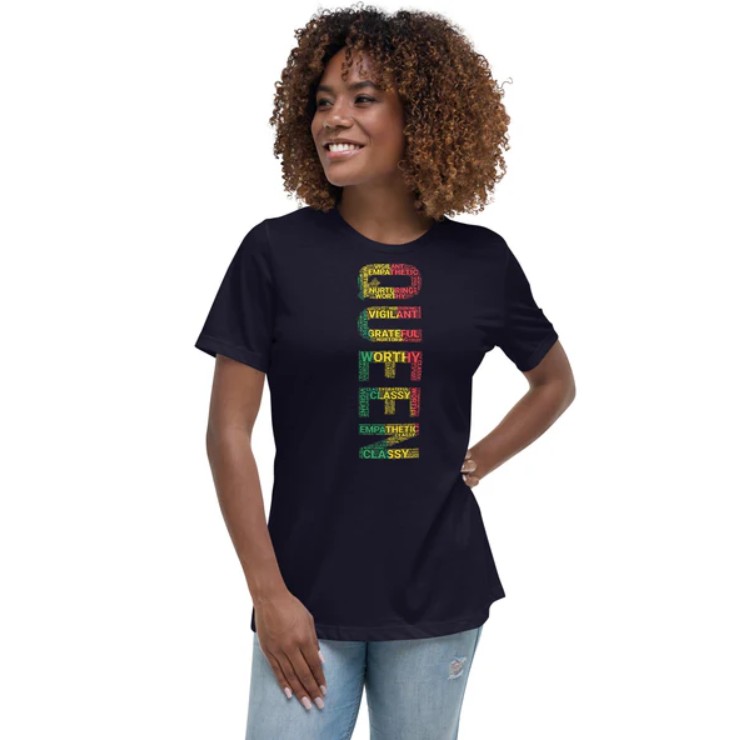
The African shirt, more than just a garment, is a statement of heritage and artistry. Characterized by vibrant colors, intricate patterns, and bold designs, these shirts are a celebration of the diverse cultures across the African continent. From the geometric precision of Kente cloth originating from Ghana and Togo, to the fluid, wax-resist patterns of Ankara (or Dutch wax print), each fabric and pattern carries historical significance, often communicating social status, familial lineage, or spiritual beliefs.

Wearing an African shirt transcends a simple fashion choice; it is an act of cultural affirmation. It can be seen on world stages, in professional settings, and at festive occasions, symbolizing pride, unity, and a connection to roots. Designers—both on the continent and in the diaspora—are continuously innovating, blending traditional textiles and motifs with contemporary cuts, ensuring the African shirt remains relevant and stylish for a global audience. The impact of this clothing goes far beyond aesthetics; it supports local economies, preserves artisanal skills, and educates the world about Africa’s rich textile legacy.

The Regal Statement of the African Hat

Complementing the shirt, the African hat serves as another crucial element of cultural attire, often bearing even deeper symbolic weight. Historically, headwear in Africa has indicated rank, wealth, and power. Consider the Zulu ceremonial headpieces, the Nigerian fila (often worn with the agbada), or the Senegalese kufi. Each style is distinct, reflecting regional identity and tradition.

The choice of fabric, the height of the crown, and the way the hat is folded or tied can all convey specific messages. For instance, the traditional Yoruba fila might be worn differently by a married man versus a bachelor. The African hat often completes the ensemble, providing a regal finish and a final punctuation mark to the wearer’s cultural narrative. Together, the African shirt and African hat form a powerful visual language that speaks volumes about identity and respect for ancestral traditions.

Barbados Clothing: Sun, Sea, and Style

Shifting focus to the Caribbean, the clothing of Barbados offers a different, yet equally compelling, cultural expression—one shaped by its island environment, history, and celebratory spirit. Barbados clothing is a vibrant blend of practical lightweight fabrics suited for the tropical climate and the elegant silhouettes demanded by both formal and festive island life.

Traditional attire often features bright colors that mirror the island’s stunning natural landscape—the turquoise of the sea, the gold of the sun, and the lush green of the foliage. While tourism has influenced modern fashion, traditional Barbadian styles for events like weddings, Crop Over festivals, or religious ceremonies emphasize tailored, yet breezy, linen and cotton. The clothing reflects the Bajan ethos: stylish, relaxed, and always ready for celebration. Whether it’s a flowing sundress or a crisp, colorful shirt, Barbados clothing embodies the warmth and hospitality of the “Gem of the Caribbean.”

Juneteenth Shirts: Commemorating Freedom

In the United States, an increasingly significant garment has emerged to mark a pivotal moment in history: the Juneteenth shirts. Juneteenth, celebrated on June 19th, commemorates the emancipation of enslaved African Americans. As the holiday has gained national recognition, clothing has become a key way for participants to express pride, remembrance, and solidarity.

Juneteenth shirts are generally designed with powerful symbolism. They often feature the official Juneteenth flag—with its star, burst, and arc—or incorporate Pan-African colors (red, black, and green) and symbols of freedom and resilience. These shirts act as wearable reminders of a long-fought journey, celebrating the freedom that arrived in Texas two and a half years after the Emancipation Proclamation. Wearing a Juneteenth shirt is a public act of education and celebration, honoring the past while looking forward to a more equitable future. It is a powerful example of how clothing can be imbued with deep historical and social meaning.

The Comfort of the Sherpa Blanket

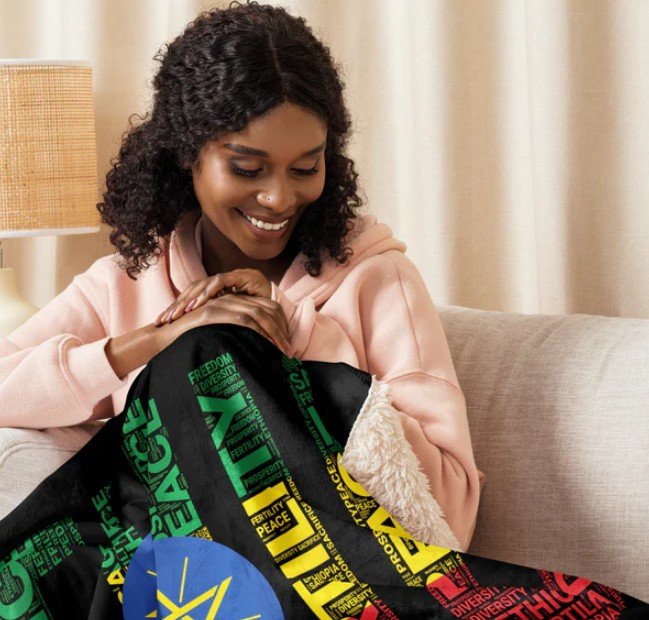
Moving from personal attire to the home, the sherpa blanket offers a universal symbol of comfort, security, and warmth. Named after the Himalayan Sherpa people, the term “sherpa” in this context refers to a specific type of synthetic fabric designed to mimic the thick, cozy wool of sheep. This dual-sided textile—smooth knit on one side, fluffy fleece on the other—has become a household staple across the globe.

The popularity of the sherpa blanket lies in its simple, undeniable appeal: pure, unadulterated comfort. It represents the concept of hygge, or cozy contentment, and is a staple for movie nights, chilly evenings, or simply creating a snug sanctuary within the home. While it doesn’t carry the historical or cultural weight of an African shirt, its widespread adoption speaks to a universal human need for warmth and softness. The sherpa blanket grounds this exploration in the domestic sphere, reminding us that cultural comfort is found not just in the clothes we wear in public, but also in the textiles we choose for our most private spaces.

The Woven Connection

These five keywords—African shirt, African hat, Barbados clothing, Juneteenth shirts, and sherpa blanket—are disparate, yet they are all connected by the common thread of human expression through material culture. They showcase the dual role of textiles: to articulate deep-seated cultural narratives and to fulfill fundamental human needs for identity and comfort.

From the vibrant patterns that declare African heritage, to the lightweight fabrics that capture the spirit of Barbados, to the symbolic messages of freedom on Juneteenth shirts, and finally, to the insulating embrace of the sherpa blanket, our choices in clothing and textiles are rarely arbitrary. They form a rich, living library of history, geography, and personal meaning—a truly global tapestry woven with tradition, creativity, and the enduring quest for both meaning and warmth.

Golga Oscar brings Alaskan Yup’ik culture to Fashion Week Minnesota

Golga Oscar brings Alaskan Yup’ik culture to Fashion Week Minnesota

It took two many years for Golga Oscar to end a fur parka that appeared in a aspiration.

Two elders gave Oscar the extended parka in the aspiration. It was manufactured out of wolf and mink fur, resources typically worn by the Yup’ik men and women of Alaska. The base of the parka experienced black and white embroidery and the arms ended up lined with a black stripe, some thing Oscar had by no means viewed in advance of on a Yup’ik design parka. 

“The parka design and style was genuinely sophisticated and beautiful,” Oscar, 25, claimed. “One of the very exclusive parkas that I hardly ever witnessed in my daily life.”

That parka will be 1 of the centerpieces of Style Week Minnesota’s Northern Lights Indigenous Nations Vogue Evening up coming Tuesday at the Machine Store in Minneapolis. Manner Week Minnesota kicks off Sunday and goes by Saturday, Apr. 29 with a distinctive topic each and every day.

Public media is independent, neighborhood-supported media for the community fantastic.

A man smiles in a portrait

Designer Golga Oscar, 25, will surface in Manner 7 days Minnesota on Tuesday, April 25, 2023.

Courtesy Golga Oscar

Oscar is headlining as the key Alaskan designer, along with two other Indigenous artists, in the Native Nations Trend Evening exhibit. The show is dedicated to showcasing the lifeways of Yup’ik Alaskan and Good Lakes Woodlands Anishinaabeg cultures.

“What connects the three of us designers with each other are the Northern Lights, which happens in the wintertime and springtime,” stated Delina White, Native apparel designer and organizer of the present. “It’s regarded in the Native nations that those are our kinfolk.”

Oscar is a two-spirit artist from a smaller, rural village in western Alaska and is also a member of the Yup’ik Nation, an Indigenous team in west and southwest Alaska. Vogue Week Minnesota will be Oscar’s to start with vogue clearly show exterior of Alaska.

“I want to tell the planet that the term Eskimo does is not will not truly outline the greater part of Alaskan Natives,” explained Oscar. “My work signifies Yup’ik society and defines a precise tribe other than the time period Eskimo.”

They are a self-taught artist specializing in stitching, beading, carving and basket weaving. Oscar’s get the job done, which features parkas, headdresses and mukluk boots, attracts inspiration from archived photography collections of Yup’ik classic clothing and books on cultural history.

“To have Oscar’s artwork and a piece of his common cultural arts in Minneapolis is genuinely unique, rare and special mainly because it does not occur typically,” stated White. “His get the job done is lovely and these a unique art form.”

Oscar said art saved their life from “Western ideology and Western toxicity.” When Oscar’s not doing the job on a new parka or headdress, they train Yup’ik language and arts at a local college in their village with an emphasis on decolonizing Indigenous culture.

“I’m performing this for myself, my household and in particular my group and my college students,” claimed Oscar. “I want them to understand that pursuing artistry, pursuing your culture, pursuing your identification can convey you to quite a few places and unveil a ton of concealed info about your cultural id, and the heritage guiding it.”

Tickets for the Northern Lights manner present get started at $75 and are readily available at fashionweekmn.com.

First AI Fashion Week coming to NYC: ‘New realm of creation’

First AI Fashion Week coming to NYC: ‘New realm of creation’

It’s “Project Runway” satisfies “Ex Machina.”

The future of style is artificial intelligence — and trendsetters are receiving with the system for the first-ever AI trend 7 days in New York, which will showcase the digitally made will work of rising designers in tech.

Designers common with buzzy AI program like Midjourney have developed entire collections of 15 to 30 seems, intended 100{515baef3fee8ea94d67a98a2b336e0215adf67d225b0e21a4f5c9b13e8fbd502} virtually, which will be offered on “models” going for walks a runway. Creatives also have “carte blanche” with the output structure. Immersive experiences range from a regular catwalk placing — complete with the chaotic backstage and A-checklist entrance row — to fantasy worlds that includes all the things from beach locations to dinosaurs.

Held April 20 and 21 at Soho’s Spring Studios — the very same site as New York Vogue Week — a find range of collections will be shown on screens at the location, which is open to the general public on Friday.

Voting will just take location on line commencing Thursday when judges including legendary makeup artist Pat McGrath will assistance pick out a winner, declared in May possibly.

But their designs won’t just exist practically: With guidance through the trend/tech incubator in partnership with the Revolve Group, the winner’s physical clothes will be obtainable to order IRL at trendsetting e-commerce giant, Revolve.

Cyril Foiret, founder of AI resourceful studio Maison Meta which is creating AIFW, told The Publish that far more than 400 men and women from all over the globe, as far as Israel and numerous regional designers right here in New York, have entered the levels of competition.

“AI trend 7 days hopes to pave the way for a new realm of creation,” he explained. “We actually assume the AIFW system will make big waves in the vogue industry and showcase what you can do and how creative you can be when it arrives to AI and fashion.”


A design from competitor FAISH.
A style and design from competitor FAISH.
FAISH/Courtesy of AIFW

AI model in tan outfit on a digitally created runway.
Anna Klyueva’s style.
Anya Klyueva/Courtesy of AIFW

Even though mainly feminine, Foiret mentioned the most stunning stat about the tech-savvy entrants — all of whom are nicely-versed in reducing-edge AI software — is the extensive age variety from “18 to 65 yrs aged.”

Fran, a 57-year-previous civil rights attorney in New York, is participating soon after instructing herself how to use AI art generators when they grew to become out there past summer months in her no cost time. Now, she’s adept with Midjourney, Stable Diffusion and Night Cafe and has amassed virtually 9,000 followers on Instagram wherever she’s been sharing her creations for the past eight months.

Whilst she in no way plans to depart her position as an lawyer, AI has come to be a fun, “easy” passion for Fran, who questioned to go by a pseudonym and have her identify withheld for qualified factors.


Max Black's creation.
Max Black’s development.
Max Black/Courtesy of AIFW

“I received into it just since it appeared like a wonderful resourceful outlet,” she advised The Submit. “I truly was not thinking of it as anything far more than just experimenting with new know-how and making use of it as a resourceful outlet.”

The digital creator, who realized about AIFW by means of a group of vogue designers, artwork directors and AI artists on Instagram, mentioned she appreciates it’s atypical for a Gen Xer — primarily just one who has tiny absolutely free time as a civil defense attorney for mother and father of kids with disabilities — to come to be concerned with new know-how that seems complex to outsiders.

“It’s a tiny little bit unconventional mainly because I’m older than most men and women who would be in the house appropriate now,” she said.


AI model in a printed dress with oversized fish swimming behind her.
When she acknowledges that AI presents serious dangers and really should not swap human creativity, Fran thinks it is also an unbelievable tool. Her structure is pictured.
Instagram/ai_trend_shots

Janet Qiu's creation.
Janet Qiu’s generation.
Janet Qiu/Courtesy of AIFW

But it was a organic development for Fran, who was a photographer for several many years, capturing NYFW and other editorials, just before giving it up in 2016 to focus on her law follow.

“As an ex-photographer, I was very intrigued in checking out the power of AI to build photorealistic and inspirational illustrations or photos,” she stated. “I’m interested in fashion photography, but I’m a sweatpants man or woman.”

One particular this sort of AI-created picture with hundreds of likes on her @ai_manner_photos web page — a female in a bathtub with flowers — commenced from an precise picture Fran snapped. Sometimes her course of action entails working with her personal photographs to layout considerably much more “elaborate” editorials, possibly mixing pictures alongside one another or modifying precise specifics, even though other periods she will work with Midjourney’s text prompt software to make a scene from scratch.


Jose Sobral design
“AI is already impacting the world and, as each time with new know-how, we will see a large effects in the entire world,” Cyril Foiret, founder of AI artistic studio Maison Meta which is generating AIFW, reported. “We do not feel it will end some positions per se, but will give new opportunities and introduce new instruments for creatives and firms.” Pictured: A structure from Jose Sobral.
Jose Sobral/Courtesy of AIFW

Whilst she acknowledges that AI presents serious dangers and need to not change human creative imagination — a much-talked about topic as of late with ChatGPT’s increasing acceptance and fears of a looming dystopia — Fran thinks it’s also an outstanding tool.

“AI is currently impacting the globe and, as each individual time with new technological innovation, we will see a substantial effects in the earth,” Foiret reported. “We do not imagine it will conclusion some jobs for each se, but will give new possibilities and introduce new tools for creatives and businesses.”

Plus, Fran claimed that dreaming up trend editorials “that would be very tough and complicated to create” is significantly much more successful with AI.

“It’s naturally a lot more quickly to generate AI artwork than, coordinating a trend shoot, capturing and article-generation,” she mentioned.


Fran, a former fashion photographer, said: "It's obviously a lot faster to generate AI art than, coordinating a fashion shoot, shooting and post-production."
Fran, a previous vogue photographer, mentioned: “It’s obviously a good deal a lot quicker to produce AI artwork than, coordinating a vogue shoot, capturing and write-up-output.”
Instagram/ai_style_photographs
“As an ex-photographer, I was pretty interested in checking out the ability of AI to create photorealistic and inspirational illustrations or photos,” Fran explained. “I’m interested in fashion pictures, but I’m a sweatpants person.”
Instagram/ai_vogue_shots
An AI photoshoot from @ai_vogue_photographs.
Instagram/ai_trend_pics


Advertisement

A style by @ai_fashion_pictures.
Instagram/ai_manner_images
Courtesy of @ai_vogue_photos.
Instagram/ai_trend_photographs


Advertisement

Foiret claimed that’s particularly the inspiration powering AI vogue 7 days: to give a system for creatives who have obtain to engineering, but maybe not the hundreds of thousands of pounds it necessitates to create comprehensive blown collections.

“We are so happy to have established this strong AI trend local community, and it is just the commence,” he explained. “We genuinely want to give the possibility to any individual who is employing these equipment to possibly grow to be a future large manner designers.”

Did the arena tour kill festival fashion?

Did the arena tour kill festival fashion?

The fashion frenzy has cooled down for competition-goers, suggests Chelsea Rice, director of creative at Archrival. Variations have been pared back again. At Coachella’s 1st weekend (14-16 April), Hailey Bieber wore a white tank and dishevelled denims, although Kendall Jenner wore a uncomplicated black outfit — a sharp distinction from the flamboyant trend the California festival had become known for. “A singular concert, nevertheless, poses an fully distinct chance for self-expression. It is close to household and lasts only a handful of hours — that means you can endure putting on the knee-large sparkly boots for the sake of trend,” states Rice.

Brands and vendors are clocking on

With their months-long operate times, arena excursions call for new brand techniques. “Festivals appear for a weekend and then go, so companies only have 1 shot at capitalising on the occasion. The danger of predicting demand from customers incorrectly is increased,” Van De Ven states. “Whereas the ongoing timeline of arena excursions permits businesses to adapt their strategies as they go. If you have way too considerably of one solution two months into the tour, you can offer savings or use neighborhood inventory advertisements to force out extra inventory.”

A adjust of key phrase to product or service titles can make a difference, she claims. “A very simple alter from ‘sparkly dress’ to ‘Swiftie sparkly dress’ can make your solutions more seen to purchasers browsing for Taylor Swift outfits. Then by directing people advertisements to the proper demographic and in the correct destinations, you’re a great deal far more most likely to see a bigger ROI on advertisement invest.”

Rental system Bipty has a “Taylor Swift Eras Tour” selection on the website, which include sparkly Danielle Guizio skirts, Poster Girl slice-out items and feathered offerings from The Bar, Revolve and Lamarque. Founder Natalia Ohanesian describes the collection as a no-brainer. “We cannot overstate the cultural effect the Eras tour has on our [Gen Z] demo, a generation of girls who grew up listening to and observing the evolution of Taylor Swift,” she says. Ohanesian notes that Bipty has viewed an uptick in borrows given that submitting about the selection on socials. It is also introduced new end users (the two loan providers and borrowers) to the website, she states. 

Social shopping platform Locker introduced an Eras outfit suggestions series on TikTok. Junior social media supervisor Hannah Detwiler created a movie for each album, with outfits from suppliers together with Terrible Gal, 12th Tribe and Revolve. The breakdown by eras for this tour designed the TikTok sequence a fitting promoting device. Detwiler displays appears to be like that match the aesthetic, be it based mostly on Swift’s very own new music video clip looks or tune lyrics. “She has a music titled “Mirrorball” in which she references a disco ball, so I showed pieces that are sequined and metallic to give a ‘disco ball’ glimpse,” she claims.

Fashion World Remembers Mary Quant, the Miniskirt Pioneer | Smart News

Fashion World Remembers Mary Quant, the Miniskirt Pioneer | Smart News
Mary Quant

Mary Quant at her condominium in Draycott Area, London, c. 1967
Keystone-France/Gamma-Keystone through Getty Photos

From models to museum curators, admirers all around the world are supplying words of appreciation for Mary Quant, who died past week at age 93. The influential designer, who popularized the miniskirt and other style tendencies of London’s “Swinging Sixties,” embodied the cultural shifts having place in the city close to her. 

“She revolutionized manner and was a excellent feminine entrepreneur. The 1960s would have by no means been the identical without having her,” wrote fellow ’60s fashion icon Twiggy Lawson on Instagram.

Quant was born in 1930 in London, exactly where she commenced her vogue career as a hatmaker’s apprentice. Striking out on her own, she opened her 1st boutique, Bazaar, in 1955. Even though she at first targeted on offering other designers’ clothes, “she became discouraged with the readily available solutions and started attending evening sewing classes so she could make her possess items,” in accordance to Kimberly Chrisman-Campbell of the Atlantic. Before long ample, “the dresses offered as rapidly as Quant could make them”—her boutique’s stock was “constantly refreshed,” allowing for speedy shifts in trend developments.

Quant boots and skirt

Quant’s liberating patterns on screen at a good in Utrecht, the Netherlands, in 1969

Jack de Nijs for Anefo / Dutch Nationwide Archives

Quant’s mission reflected the social actions of London at the time. Like their American counterparts, the young English beatniks of the late 1950s have been daring in their apparel and visual appeal. Quant wanted to make clothes that represented vitality and freedom—leading her toward bobs, hot pants and the mighty miniskirt. She and a French designer named André Courrèges have the two been credited for popularizing the miniskirt, even though Quant refused credit for its creation.

“It was not me or Courrèges who invented the miniskirt in any case. It was the ladies in the road who did it,” Quant at the time claimed, according to Neri Karra’s 2021 guide Trend Entrepreneurship.

Bazaar promptly grew in recognition, and Quant opened up a 2nd store in 1957. In advance of lengthy, J.C. Penney sought a deal to distribute her apparel in the United States, and they signed a worthwhile settlement in 1962. Four decades afterwards, Quant was identified as an officer of the Purchase of the British Empire.

Vogue writers and historians agree that Quant’s layouts did so well since they captured the youthful excitement of postwar London. The outfits themselves ended up liberating and relaxed for girls, showcasing short hemlines and calm fits “suited to the actions of normal lifetime,” in the designer’s words. The atmosphere of her retailers also felt cost-free, with jazz new music enjoying around the speakers when prospects shopped with beverages in their hands.

Bazaar

138A King’s Street in London, web-site of the initially Bazaar boutique 

Kwh1050 by means of Wikimedia Commons underneath Resourceful Commons Attribution-Share Alike 4.

Soon after Quant’s demise on April 13, Elizabeth Paton of the New York Moments wrote, “Her vibrant and unashamedly hot dresses for a significantly shifting entire world were adored as a great deal by stars like Twiggy and Audrey Hepburn as they had been by youthful girls on the avenue with new thoughts of liberty.”

Quant retired as the head of Mary Quant Ltd., which had occur below Japanese possession, in 2000. In 2019, her do the job was the issue of a significant exhibition at the Victoria and Albert Museum. Embracing the egalitarian mother nature of Quant’s legacy, curator Jenny Lister wanted to explore beyond the designer’s possess archive and pieces lent by other museums. She questioned persons from all about the world to add their individual photos and clothes to the exhibition, as Meilan Solly documented for Smithsonian in 2018.

“To assist us explain to these incredible stories, we are asking persons to look at attics, cabinets, as very well as family members image albums, for the prospect to feature in our exhibition,” Lister reported in a statement at the time.

V&A exhibit

Quant’s layouts on display at the V&A Museum in 2019

Livvy Adjei by using Flickr

The exhibition ran through February 2020, and the museum proceeds to keep the most significant selection of Quant garments in the earth. In a video posted to Twitter following the designer’s death, the Victoria and Albert emphasised her impact and celebrated her legacy. 

“It’s unachievable to overstate Quant’s contribution to fashion. She represented the joyful liberty of 1960s manner, and furnished a new function model for younger girls,” the museum wrote.

What the Quiet Luxury Trend Means for Sustainability

What the Quiet Luxury Trend Means for Sustainability

Merino wool sweaters from The Row with four-determine price tag tags are not going to help you save the world. But the current loud instant for “quiet luxury” shares a lot of attributes with calls for much more local weather aware usage.

Define the seemingly ubiquitous vibe shift (in fashion crafting at minimum) much less by its sky-high price tag level and extra by fashion and consumer mentality, and the similarities are obvious. It is about shopping for much less, but far better, investing in vintage pieces that will last the examination of time and trying to get out excellent products.

Vogue brand names are dealing with it like just yet another craze. They’re not mistaken.

Traditionally, understated stylish has performed well in instances of economic uncertainty — surely a factor in the latest fashion instant. To be absolutely sure, the cultural mainstreaming of local weather issues is helping to boost the advertising attraction of good quality staples, building them feel like appealing, liable selections, instead than tedious.

What it adds up to however, is extra intake.

The hunger for “stealth wealth” dressing is exhibiting up in surging revenue at brands like Brunello Cucinelli and Zegna. Even ultra-rapid-style label Shein obtained in on the motion with a landing site devoted to peaceful luxury.

To tackle fashion’s climate effects, purchasers, specifically the wealthy, need to have to be acquiring a lot less.

In accordance to the Berlin-primarily based imagine tank the Warm Or Cool Institute, shoppers in wealthy nations around the world should really be restricting by themselves to five new garments a calendar year to stand a chance of retaining worldwide warming at much less than catastrophic stages.

For quite a few, even which is an indulgence extra than a necessity. The average individual shouldn’t want additional than 74 to 85 garments and shoes (dependent on the type of local climate they dwell in) to retain them protected for all instances, in accordance to the report. If that seems limiting,in the 1960s the ordinary French wardrobe consisted of about 25 outfits, or 40 parts in whole, and the region was regarded the epitome of stylish.

It’s hard to see a extended-standing change in buying habits in the present-day trend minute, specifically as development cycles transfer so quick these times.

The Cut’s by now named time on silent luxury, earning the position that its elitist undertones are out of touch with the “eat the rich” mentality associated with the new technology of purchaser. It is a criticism of inaccessibility and affordability that has plagued the sustainable style movement also.

But finally, tackling fashion’s environmental footprint isn’t about a specific design, it is about the way we shop. And so far, that is not shifting.

For additional BoF sustainability protection, signal up now for our Weekly Sustainability Briefing by Sarah Kent.