The auto industry is rife with trends, from calling everything an ‘SUV’ to various design and technology features that proliferate across numerous brands and models.
We’ve also seen a number of trends off the back of the COVID-19 pandemic such as supply shortages, freight delays and rising costs of materials, and therefore product.
Here, the CarExpert team shares their top automotive trends that need to die out in 2023. Share yours with us in the comments!
Alborz Fallah
“Supply is limited”. No, it’s not… or it won’t be very soon
The semiconductor issue is largely resolved, interest rates are through the roof and forward orders for new cars will start seeing higher than normal cancellation rates, as the average consumer assesses their immediate need for a new car given the higher monthly repayments.
Meanwhile, the factories will need to churn out cars as they have fixed costs and producing more cars is the best way to stay profitable at scale.
Competing business priorities between the manufacturers at a factory level wanting to massively increase supply versus the local companies that want to keep supply artificially restricted to keep profit margins up – selling 10x at $2500 profit per unit is more profitable than 20x at $1000 profit – will be a big contention point for most OEMs going into 2023.

Paul Maric
Vegan interiors for the sake of vegan interiors
This year at the Polestar 3 reveal, I learned a lot about vegan interiors – a topic I never really cared about, especially given how much I like steak.
According to Polestar, most vegan interiors are produced from highly toxic chemicals that aim to mimic leather, but are actually significantly worse for the environment than cloth or fabric.
Polestar is now charging a healthy sum for full vegan interiors along with leather interiors, simply because they are passing on the cost of ethically sourcing these materials to the consumer.
Their leather is traceable and sourced using bi-products of the meat industry, while their vegan materials are sustainably produced to limit the use of toxic chemicals. So before you start feeling warm and fuzzy about your vegan interior, remember that not all materials are created equally.

Anthony Crawford
Buttons please, we’re still asking…
Perhaps its my age, but I’m still a big fan of a few dials and knobs, at least for climate-control and volume tuning. Nothing is more infuriating than having to drill down into several menus in order to lower or raise the air-con temperature in the car.
Worse still when you’re on a call and it’s getting hotter by the minute and you’ve forgotten which sub menu houses the climate control – it’s more frustrating than you can believe.
It’s a genuine issue when carmakers choose to completely abandon actual switchgear in favour of multiple touchscreens, particularly if the interface isn’t all that intuitive and you’ve got multiple screen pages to access.

Scott Collie
Overly intrusive safety systems need to get in the bin
We’re well and truly in the semi-autonomous era. Even base city hatchbacks come with lane-keeping assist, adaptive cruise control, and speed limit warnings, and luxury carmakers have gone further with cars that’ll change lanes for themselves, or even park themselves with no-one behind the wheel.
To be clear, I’m not against these features… provided they’re well calibrated. Unfortunately, they often aren’t.
Hyundai and Kia’s latest cars, for example, beep at you every time you break what they think is the speed limit – even if they’re wrong, usually in a school zone outside of school hours.
If you’re doing 61km/h in a 60 zone, they beep. If you drop from 61 to 59km/h, and then drift back to 61km/h, they beep again. It’s utterly infuriating, and takes a minimum of three button/screen presses to turn off.
Even worse is the fact you can’t leave these systems off if they’re getting in the way, thanks in no small part to the automotive world’s helicopter parents at Euro NCAP.
Instead, you’re forced to take your eyes off the road (safety first!) to find whichever sub/sub/sub/sub/sub menu is responsible for the systems, and turn them off every single time you turn the car on.
Mike Costello
There are so many options.
Brands obsessing over tokenistic NFTs and metaverse reveals, continued over-reliance on user-unfriendly touchscreens over buttons, OTA software updates and connected services that cost too much, the slow death of cheap cars, horrendously complex controls to turn off driver-assist functions… I could go on.
But one that irks me is the trend of categorising and marketing seemingly every car as an ‘SUV’ to tap into rampant demand for these types of higher-riding vehicles, which now have more than 50 per cent market share in Australia.
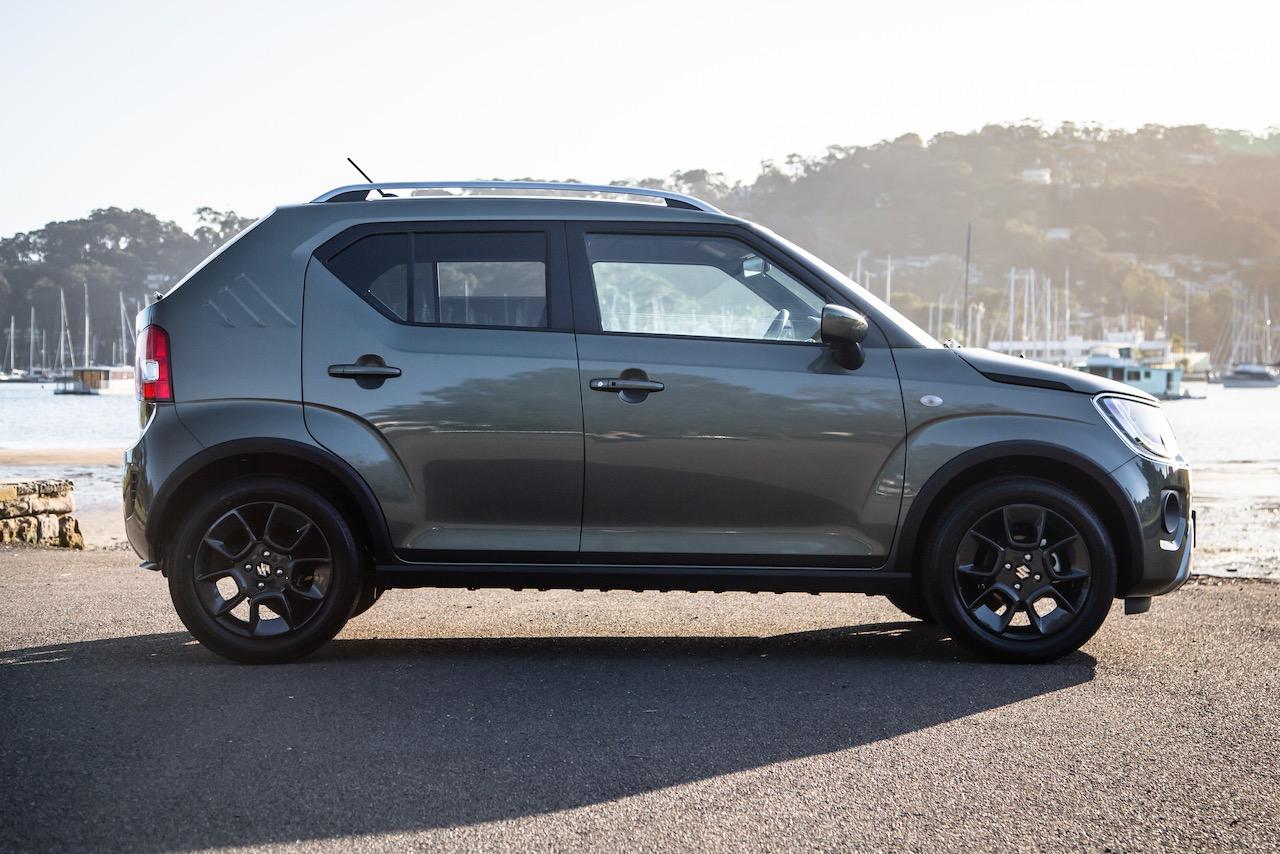
Maybe it’s time we stopped calling the Suzuki Ignis, Nissan Juke, Kia Niro, Mazda MX-30, Hyundai Kona, Ford Puma and Toyota C-HR SUVs? Let’s face it: they’re design-led hatchbacks, through-and-through. Of what purpose is a catch-all with near-boundless parameters?

James Wong
Australia getting shafted with old powertrain tech
I’m well aware that our lagging emissions standards and limited access to new powertrain technologies really is a problem of our own making, but I want to see manufacturers take a stand in 2023.
I struggle to see how so many OEMs can be harping on about reducing emissions and electrification, but still be importing old Euro 5 powertrains with next to no fuel-saving technology for real-world use.
Emissions reduction and electrification needs to be approached in a holistic way, with numerous solutions gradually rolled out across various budgets and segments. Otherwise, choice is reserved the privileged few.
The CO2 as well as the petrol and diesel we’d collectively save every year if your cars turned off at the lights for example, or decoupled the transmission to coast down a hill, or shut off cylinder banks at a cruise, would all amount to a significant impact – tonnes and tonnes of CO2 would never be released into the atmosphere and the litres and litres of fuel saved over time could basically buy you one or two free tanks a year.
It’s not to say this is a new idea, either. Idle stop/start, cylinder deactivation and coasting functions have been around for years, but now these very basic technologies are being taken off Australian models in the interest of prioritising cleaner powertrains for other markets with emissions regulations, and partly due to consumers whinging about it.
Hopefully, with the new Federal Government’s planned introductions of emissions targets, fuel quality improvements and more incentives for plug-in vehicles, we might see some change.
While I’m at it, I’m also sick of manufacturers shunning interesting colour and trim palettes and bringing every new model here in four shades of grey with a sole black interior option. It’s boring, stop it.

William Stopford
Chimes that can’t be turned off
I hate repetitive sounds. It’s human nature to hate them, or why else would fire alarms blare the same tone over and over again?
So imagine my frustration when I got behind the wheel of an updated Hyundai Palisade – a genuinely good SUV – and encountered the most annoying feature of any vehicle I’ve driven all year: the speed alert.
It sounds the most annoying chime and to turn it off you have to go hunting through menus on the touchscreen. But that doesn’t kill it permanently, as once you restart the vehicle the overspeed alert comes back on.
There’s a chime when you exceed the posted speed limit, which is annoying but I can begrudgingly accept. But there’s a separate, higher-pitched chime when the vehicle detects a new speed limit. Dear god why? Doesn’t Hyundai realise I have eyes?
Hyundai says it’s due to a European-market requirement, but that is something that should be stripped out locally as far as I’m concerned. Even using a subtler chime or programming a more readily accessible button would mitigate some frustration – I think of some of the more annoying stop/start systems in some vehicles and how there’s a physical button to deactivate them.
Every time I got into that Palisade, I had to immediately turn it off, so I can’t imagine how actual owners feel. While I’m ranting, if a chime sounds in a car and it isn’t immediately clear what I’m actually being warned of, that’s poor design.

Jack Quick
NFTs
When I hear ‘NFT’ my eyes start to glaze over at a rapid pace.
I still don’t really see the connection between car companies and non-fungible tokens (NFTs), but seemingly at every new car launch there’s one now attached.
At first it was primarily the luxury brands such as Lamborghini and Rolls-Royce that were promoting their NFTs, but now consumer-level brands such as Hyundai are getting in the mix too.
I understand the word NFT has been a huge buzzword over the last two years and there’s a huge hype for these kinds of unique pieces of digital artwork.
I also get that in certain circumstances people can make a lot of money off these sought-after NFTS, but I’ve also heard a lot of people losing money too.
If you feel the opposite and think NFTs do in fact make sense in the automotive world, feel free to let me know in the comments.

Derek Fung
Incomprehensible alphanumeric naming schemes
When Volkswagen launched the 4.2m-long ID.3, the name kinda made sense. It was a Golf-sized electric hatch, adjust future model names accordingly, right? Maybe add an X somewhere for crossovers. Done!
Next came the 4.6m ID.4 crossover. Ummm, okay. So, the ID.5 should be a size larger? No, it’s a “coupe” version of the ID.4.
No, that role is filled by the ID.6, a 4.9m three-row crossover. The upcoming Passat-sized model may be the ID.Aero or ID.7. What? And, if Volkswagen ever decides to make a sedan or hatch to fill in the space between these vehicles, what will it be named?
Meanwhile, Polestar’s chronological naming system might make sense if the brand was aiming to be a niche manufacturer with a limited model range.
These brands are not the only offenders, but they sprang to my mind first because of their newness.
Have we missed anything? Tell us which trends you’d like to see die in 2023 below!
MORE: Latest Car News