
CNN
—
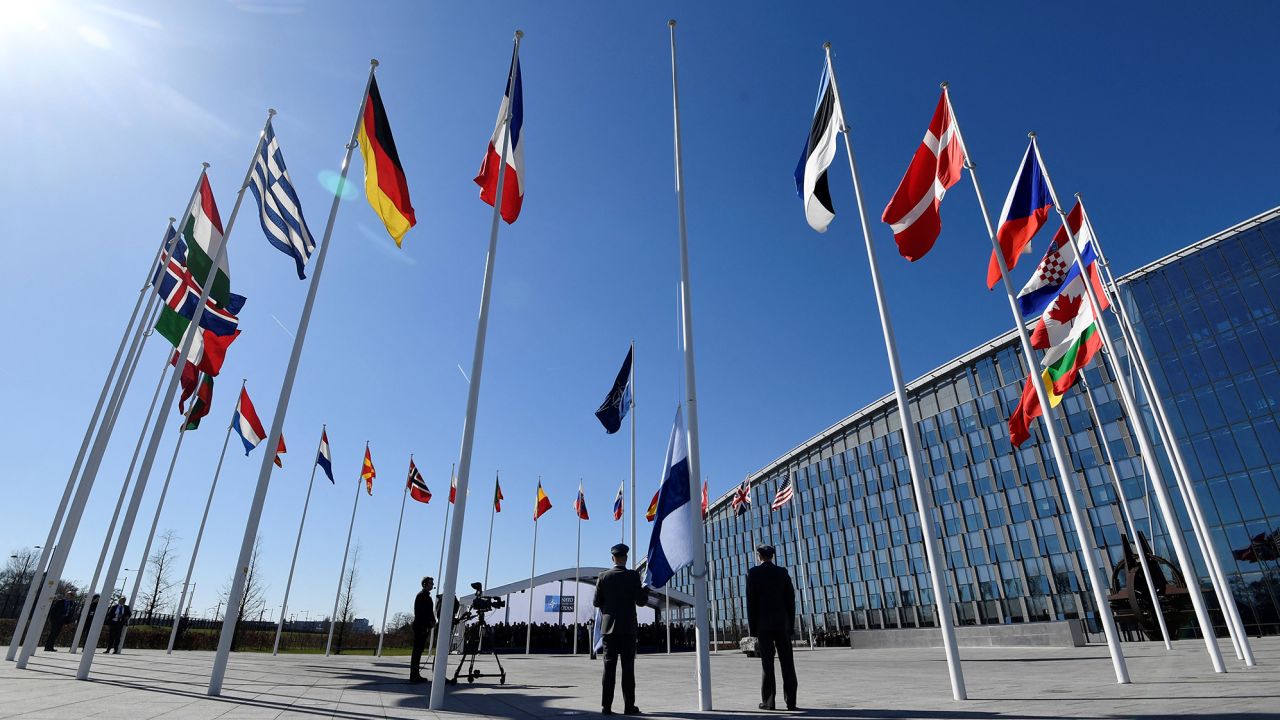
Finland officially became the 31st member of the North Atlantic Treaty Organization (NATO) on Tuesday, marking a major shift in the security landscape in northeastern Europe that adds some 1,300 kilometers (830 miles) to the alliance’s frontier with Russia.
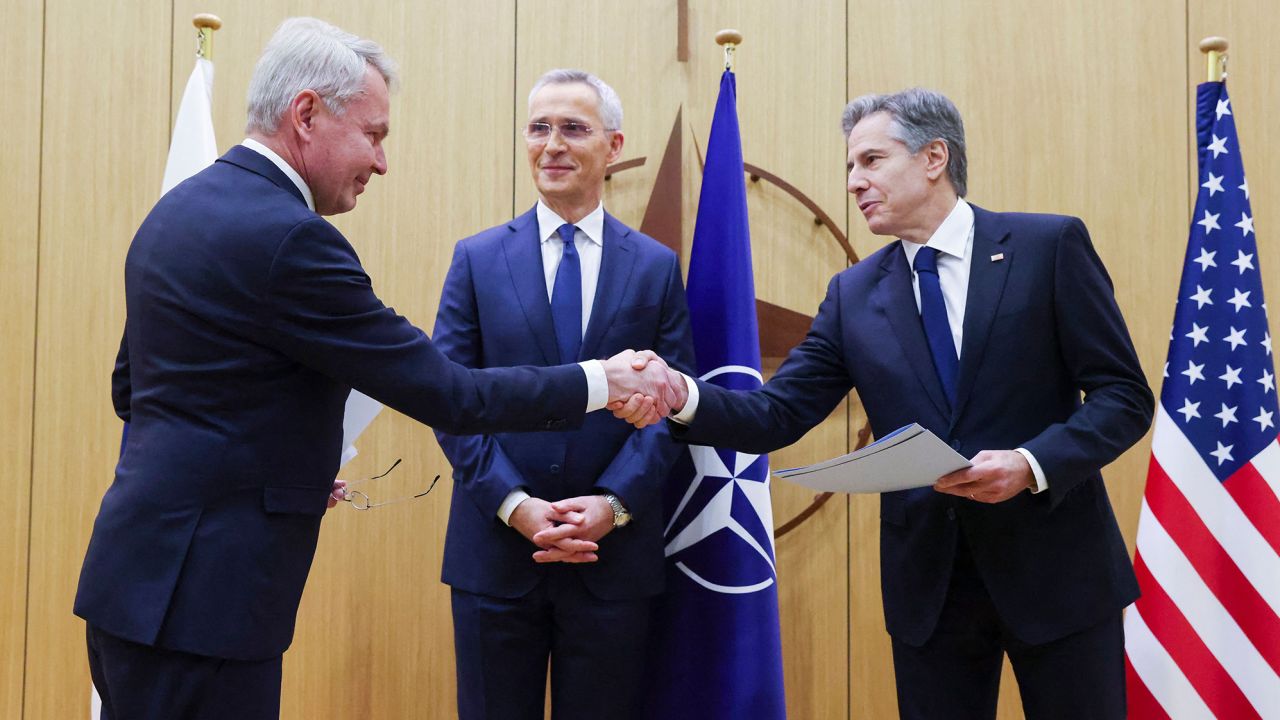
The Nordic nation’s accession was sealed during a formal ceremony at the NATO headquarters in Brussels on Tuesday.
US Secretary of State Antony Blinken and NATO Secretary General Jens Stoltenberg were on hand as the Minister for Foreign Affairs, Pekka Haavisto, established Finland’s accession.
“Finland has today become a member of the defense alliance NATO. The era of military non-alignment in our history has come to an end. A new era begins,” the Finnish presidency said in a statement.
“Each country maximizes its own security. So does Finland. At the same time, NATO membership strengthens our international position and room for maneuver. As a partner, we have long actively participated in NATO activities. In the future, Finland will make a contribution to NATO’s collective deterrence and defense,” it added.
Finland’s acceptance into the US-led security alliance presents a blow to Russian President Vladimir Putin, who has long sought to undermine NATO, and before invading Ukraine, demanded the bloc refrain from further expansion.
The invasion instead drove non-aligned Finland and Sweden to abandon their neutrality and seek protection within NATO, though Sweden’s attempt to join the bloc has been stalled by alliance members Turkey and Hungary.
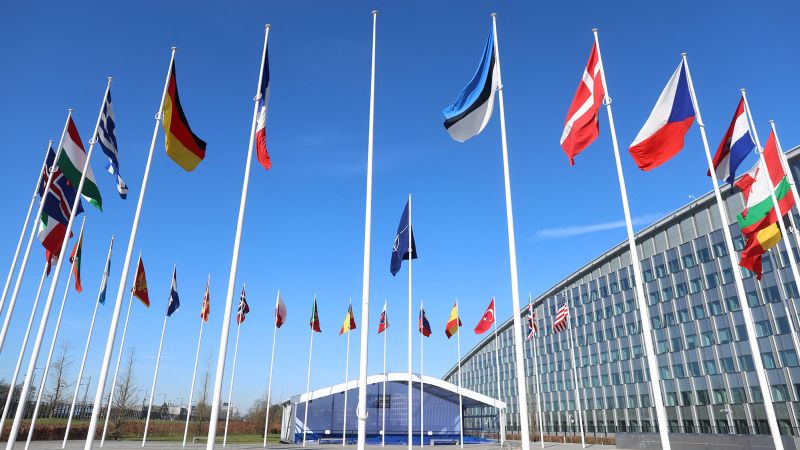
On the eve of Tuesday’s ceremony, NATO Secretary General Jens Stoltenberg heralded the raising of the Finnish flag for the first time at the alliance’s headquarters in Belgium, saying “it will be a good day for Finland’s security, for Nordic security, and for NATO as a whole.”
But Russia has warned that further NATO expansion will not bring more stability to Europe, and on Monday said it would scale up forces near Finland if the alliance sent any troops or equipment to the new member country.
“We will strengthen our military capabilities in the west and northwest if NATO members deploy forces and equipment on Finnish territory,” Russia’s Deputy Foreign Minister Alexander Grushko told Russian state news agency RIA Novosti.
Kremlin spokesperson Dmitry Peskov reiterated that Finland’s accession will force Moscow to “take counter-measures to ensure our own security, both tactically and strategically.”
Prior to Tuesday, Russia shared about 1,215 kilometers (755 miles) of land border with five NATO members. Finland’s accession more than doubles NATO’s land border with Russia.
Stoltenberg said Putin had “failed” in his attempt to “slam NATO’s door shut.”
“Today, we show the world that he failed, that aggression and intimidation do not work. Instead of less NATO, he has achieved the opposite – more NATO – and our door remains firmly open,” he added.
“Joining NATO is good for Finland. It is good for Nordic security and it’s good for NATO as a whole. Finland brings substantial and highly capable forces expertise on national resilience and years of experience working side by side with NATO allies.”
Finland’s NATO membership guarantees the northern European nation access to the resources of the entire alliance in the event of attack.
It includes the protection offered by NATO’s Article 5 principle, which states that an attack on one member of NATO is an attack on all members. It’s been a cornerstone of the 30-member alliance since it was founded in 1949 as a counterweight to the Soviet Union.
NATO membership also better integrates Finnish forces in training and planning with NATO allies.
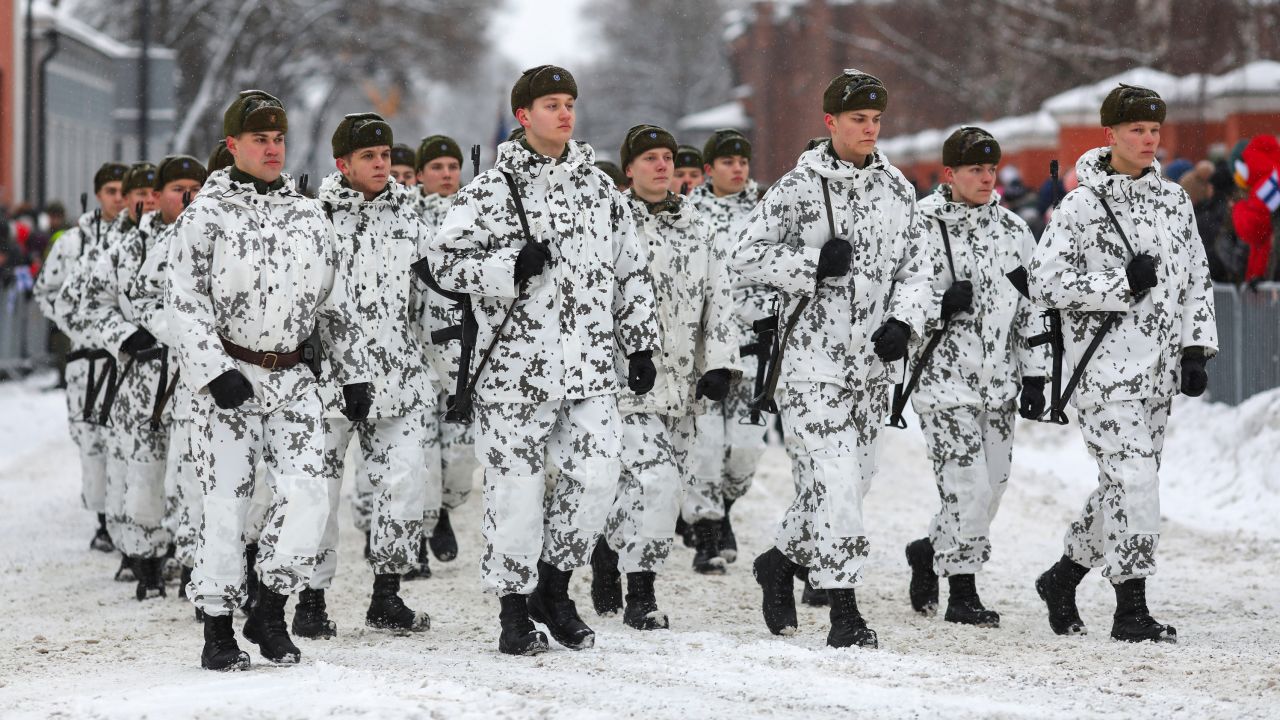
The country is no stranger to working with NATO, with its troops regularly participating in NATO exercises under a partner status.
The Finnish Defense Force also operate some of the same weapons systems as other NATO members, including US-made F/A-18 fighters, German-designed Leopard main battle tanks and K9 Howitzers used by Norway and Estonia among others.
Helsinki has also signed on the F-35 stealth fighter program, which will allow its air force to work smoothly with NATO members including the US, UK, Norway, Italy, Canada, Poland, Denmark and the Netherlands.
A November report from the Washington-based Wilson Center lists three key areas where Finland benefits NATO: reserve forces, technology access and artillery forces.
“Finland’s artillery forces are the largest and best-equipped in western Europe,” the report said.
“With some 1,500 artillery weapons, including 700 Howitzer guns, 700 heavy mortar, and 100 rocket launcher systems, the Finnish artillery has more artillery firepower than the combined militaries of Poland, Germany, Norway, and Sweden can currently muster,” it said.
The Wilson Center report also noted Finland’s strong cyber security record, pointing out the country is home to Nokia, “a major provider of 5G infrastructure,” and one of three major providers of 5G infrastructure in the world, along with Sweden’s Ericsson and China’s Huawei.
And it said Finland can muster 900,000 reserves who have been trained as conscripts in its armed forces. The wartime strength of Finnish forces is 280,000 troops, it says.
Finland’s accession comes days after Turkey’s parliament voted to ratify the country’s membership, clearing the final hurdle for the country to join NATO and putting an end to months of delays.
Finnish and Swedish public support for joining NATO surged following the invasion of Ukraine. “Everything changed when Russia invaded Ukraine,” outgoing Finnish Prime Minister Sanna Marin said last April. “People’s mindset in Finland, also in Sweden, changed and shifted very dramatically.”
NATO has an open-door policy, meaning that any country can be invited to join if it expresses an interest, as long as it is able and willing to uphold the principles of the alliance’s founding treaty.
However, under the accession rules, any member state can veto a new country from joining.
An overwhelming majority of NATO members welcomed Finland and Sweden’s applications, but two countries – Turkey and Hungary – began to stall the process.
Turkey and Hungary later softened their stance on Finland’s accession, opening the door to its membership in March, while continuing to block Sweden’s membership application.
There is hope for Sweden’s bid, however. On Monday, Stoltenberg said Finland’s accession is “in itself something we should celebrate” but that it was also good for Sweden.
“It makes Sweden more integrated into NATO and makes Sweden even more safer,” Stoltenberg said. “At the same time we celebrate and enjoy that Finland is now a full-fledged member, we should continue work to finalize the Swedish accession process.”
Finland’s fold into the alliance also reignited calls from Ukraine to join.
“Finland’s accession is a clear message that the time to revise old strategies and old perceptions has come and there is no better solution to ensuring Euro-Atlantic security as a whole than eventual membership of Ukraine in NATO,” Ukrainian Foreign Minister Dmytro Kuleba said as he was welcomed to the NATO headquarters by Stoltenberg on Tuesday.
A chorus of NATO members congratulated Finland as it joined the alliance on Tuesday.
“Finland, welcome to NATO,” Britain’s Prime Minister Rishi Sunak tweeted. “This is a historic day for you and for our alliance. It’s a step that makes every one of us safer. All NATO members now need to take the necessary steps to admit Sweden, so we stand together as one to defend freedom in Europe and across the world.”
He also called on Turkey and Hungary to ratify Sweden’s bid for NATO membership.
German Chancellor Olaf Scholz also hailed Finland’s accession to NATO.
“Finland is now a member of #NATO – this is good news and a victory for transatlantic security. With #Finland, our defense alliance has gained a strong friend,” he tweeted.
Scholz also gave his backing to Sweden’s bid to join the military alliance.
Josep Borrell, the European Union’s foreign policy chief, tweeted: “I warmly welcome the accession of #Finland to @NATO. This historic step will strengthen the Alliance, reinforce European & Transatlantic security and contribute to further fostering our #EU-NATO strategic partnership.”