

‘The People’s Hospital’ doctor treats Houston’s uninsured and undocumented : Shots

‘The People’s Hospital’ doctor treats Houston’s uninsured and undocumented : Shots

Paramedics at Ben Taub General Hospital speed a patient with a gunshot wound to the trauma team for further care. Ben Taub is the largest safety-net hospital in Houston.

Gregory Smith/Corbis via Getty Images


hide caption

toggle caption

Gregory Smith/Corbis via Getty Images


Paramedics at Ben Taub General Hospital speed a patient with a gunshot wound to the trauma team for further care. Ben Taub is the largest safety-net hospital in Houston.

Gregory Smith/Corbis via Getty Images

As a doctor in a so-called “safety-net” hospital, Ricardo Nuila’s daily practice looks quite different from that of his colleagues who work in private or not-for-profit hospitals. That’s because safety-net hospitals treat everyone who walks in the doors — regardless of insurance status.

Many of Nuila’s patients at Houston’s Ben Taub Hospital are dealing with serious illnesses as a result of not being able to get access to basic preventive care. “What we see is that patients’ lack of health care has meant that the disease has been able to grow within their bodies,” he says. “Their cancer is widespread, or we find that they have an infection that has not been treated or discovered.”

In his new book, The People’s Hospital, Nuila writes about his experiences at Ben Taub, which is the largest safety-net hospital in Houston. He says despite the hospital’s budget constraints, the doctors and nurses there still manage to provide quality health care. By limiting the number of patients a practitioner can see in a day, Ben Taub allows physicians to spend more time with their patients than is typical.

“My cap is 15 patients in one day,” Nuila says. “That’s compared to some of my colleagues in the private world, who I’ve heard admit up to 24 patients in one night, or don’t carry a cap.”

Because resources are tight at Ben Taub, there is an emphasis on using them mindfully, Nuila says. Instead of ordering an MRI with the push of a button, for instance, he might talk to the radiologist directly, to find out if extra imaging is really called for. “There are benefits to further discussion between medical professionals about emergencies and how to deal with these emergencies,” he says.

Overall, Nuila says, working at a safety-net hospital allows him to keep his focus on medicine: “I like that I have the time to be able to hear my patients’ stories, that I don’t have to think about billing all the time, that I can sit with them and hear about why they came to the hospital and learn about their lives — and that, no matter what, we are going to be thinking about how best to help them, regardless of whether they have insurance or not.”

Interview highlights

The People's Hospital, by Ricardo Nuila

On treating undocumented people at the hospital

It’s not considered illegal. … The law EMTALA — the Emergency Medical Treatment & Labor Act — that was passed in the 1980s, that states that anybody in the United States, whether you’re a resident or not, whether you have health insurance or not, can go to a hospital and receive an exam and stabilizing treatment. So that’s a right that everybody in the United States has, regardless of citizenship. What’s different about the safety-net hospital is that we have clinics and we have chronic care also — and that was under question by certain politicians, who ultimately found that it didn’t make any sense to question that. Because when you get in the way of preventive care, when you get in the way of primary care, those patients end up coming to the emergency room and they become much more expensive. … So, [the politicians] decided that the financial gains were more important [than limiting care].

On explaining the American health care system to uninsured patients

The patients are all so different — some have had multiple family members in the United States before, so they understand the landscape a little bit better. But yeah, it can feel very, very contradictory when I tell patients that, well, “You need health insurance for that.” And they will say sometimes, “Well, in Mexico or in Guatemala (or whatever), I don’t necessarily.” And it’s hard to explain that in the richest country in the world, there’s little available for people without health care insurance.

Now, I’m happy that in Harris County [in Texas], where I work at Harris Health, we can provide a robust set of services. But somebody who lives outside of the county doesn’t have availability for those services. And that’s one of the things that I’ve argued, is that the line between Mexico and the United States is not as important as the line between Harris County and Fort Bend County, for instance, in some of the treatments that we give to patients.

On speaking Spanish with patients

That’s one of the reasons that I love my job and I love the hospital where I work — I can speak Spanish. … The people are so happy to hear somebody attempt to speak their language, and not just on a translation basis, but the flavor of the language and also thinking about the locations [they come from]. For instance, when I ask somebody where they’re from and they say Mexico or El Salvador, it’s never enough for me to hear just a country. I need to ask a region so I can situate it in my mind, the map, and draw a relationship that I have with that region. And so I think it helps a lot for building trust with patients.

On his reaction when very sick patients put their faith in God

I don’t dismiss it. Because I feel that science and medicine, we don’t know everything. There’s a lot of mystery in this world and I think faith is important. I’m not saying that faith in one particular religion is important, but faithfulness is important. I think that in my experience, when people demonstrate faith, whether it’s in their God or whether it’s in the treatment, they do better. It’s not my job to take away that person’s faith. What I tell people is that I’m just doing my job, which is [that] I’m a human being, and I need to tell you … the recommendation from doctor human beings for this illness and for the treatment, but that I’m just a person and I don’t know. And that’s the truth – we don’t know everything. We have very good ideas. When somebody is close to death, we can prognosticate quite accurately if that person’s going to die or not. But I can not tell exactly when that is going to happen. And I don’t want to rob somebody of their faithfulness.

On struggling with thoughts of suicide after the suicide of a friend and colleague

I think everything was a struggle. And I think that seeing somebody like Dave, who I admired so much, who was a friend, my best friend in the hospital, who I could speak with and who was so knowledgeable and intelligent — just to know that that is a risk for me as I grow older. Dave was also a very good father and it’s something that I’ve struggled with, parenting.

It felt so much like a pressure of trying to be a good father while trying to be a good doctor, while trying to be a good writer. They can work together, but there are moments where they feel like they can just implode on themselves. And I think that knowing that that had happened to my friend weighed on me and made me think, Is this going to be me? Is this the fate that so many of us who care a lot that we face? …

Therapy helped. I found a therapist who was very attuned to people who were creative types. … That listening really helped. My relationships improved. When I was at my lowest, I could look at my relationships with the people who were around me, who I valued the most, and I can see that at that moment they weren’t great relationships. And somehow over time, those relationships started to improve and that helped immensely. I think that writing also helped me too, at the end of the day.

On hospital staff losing their sense of meaning with their job because of burnout

For me that just demonstrates a real fundamental problem with how health care is administered in this country. If something like medicine, where you are helping people on a daily basis, if you can’t see the meaning behind that, that’s a bad omen. Whenever a patient tells me, “I’m thirsty” and I go get them ice water, I feel really good that day. Something as simple as that. With my Spanish-speaking patients, they can say one phrase to me and I will feel satisfied for that day — when they say, “Que amable,” which means you were very kind in the way you said that. And I feel that that gives me a lot of meaning for the day. But I feel that the pressures and the mechanism by which health care operates right now obfuscates that for so many people. And that’s sad to me. Now, I take a little bit of heart in that the medical field is really taking this seriously and is trying to do something about this. There is an added emphasis now on bringing in the arts and humanities into medicine.

Audio interview produced and edited by: Sam Briger and Thea Chaloner. Audio interview adapted for NPR.org by: Bridget Bentz, Molly Seavy-Nesper and Deborah Franklin.
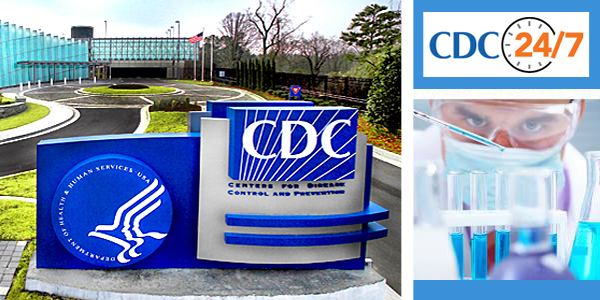
CDC Announces Negative COVID-19 Test Requirement from Air Passengers Entering the United States from the People’s Republic of China | CDC Online Newsroom

CDC Announces Negative COVID-19 Test Requirement from Air Passengers Entering the United States from the People’s Republic of China | CDC Online Newsroom

CDC is asserting today that it will carry out a prerequisite for a destructive COVID-19 test or documentation of restoration for air travellers boarding flights to the United States originating from the People’s Republic of China (PRC) and the Unique Administrative Locations of Hong Kong and Macau. CDC is announcing this phase to sluggish the spread of COVID-19 in the United States for the duration of the surge in COVID-19 circumstances in the PRC provided the lack of enough and transparent epidemiological and viral genomic sequence details remaining described from the PRC. These details are crucial to keep track of the case surge properly and decrease the prospect for entry of a novel variant of issue.  CDC will continue to keep track of the condition and alter our method as needed.

Variants of the SARS-CoV-2 virus carry on to arise in nations around the world around the globe. However, minimized testing and circumstance reporting in the PRC and minimal sharing of viral genomic sequence knowledge could delay the identification of new variants of worry if they occur. Pre-departure testing and the prerequisite to exhibit a adverse examination consequence has been proven to lower the number of infected passengers boarding airplanes, and it will assist to sluggish the distribute of the virus as we function to establish and realize any likely new variants that may well emerge.

Beginning at 12:01 AM ET on January 5, all air travellers two many years and older originating from the PRC will be essential to get a take a look at (these as a PCR test or an antigen self-check administered and monitored by a telehealth services or a licensed service provider and approved by the Food stuff and Drug Administration or the pertinent countrywide authority) no far more than 2 days ahead of their departure from the PRC, Hong Kong, or Macau, and show a damaging exam final result to the airline upon departure.

  • The prerequisite applies to these air passengers no matter of nationality and vaccination status.
  • This will also apply to persons touring from the PRC by means of 3rd nation transit and to travellers connecting via the United States onward to additional places.
  • Along with applying this prerequisite to direct flights from the PRC, travellers transiting Incheon Worldwide Airport, Toronto Pearson Intercontinental Airport, and Vancouver Intercontinental Airport on their way to the United States will be needed to give a unfavorable COVID-19 test if they have been in the PRC in the last 10 days no a lot more than 2 times ahead of their departure to the United States. These a few transit hubs cover the overpowering vast majority of travellers with journey originating in the PRC and the Special Administrative Locations. We will carry on to keep track of travel designs, change our approach as needed, and maintain People knowledgeable in a timely fashion.
  • Travellers who analyzed constructive much more than 10 days ahead of the flight can deliver documentation of recovery from COVID-19 in lieu of a unfavorable check consequence.
  • Airways need to ensure the negative COVID-19 examination consequence or documentation of restoration for all passengers prior to they board or deny boarding to the passenger.

CDC is also growing the Traveler-centered Genomic Surveillance plan (TGS), a voluntary system that serves as an early warning method to detect and characterize new and scarce variants of the virus that leads to COVID-19.  TGS collects nameless nasal swabs from arriving international travelers on picked flights at main U.S. intercontinental airports. The application exams for existence of the COVID-19 virus, and if it is detected, the software sequences the virus’s genome to detect any new variants. The application is increasing by adding more airports (Los Angeles and Seattle)—bringing the whole range of airports to 7 and selection of weekly flights protected to approximately 500 from at minimum 30 countries throughout all World Well being Corporation (WHO) areas.  This contains around 290 weekly flights from PRC and surrounding areas.

TGS has tested to conquer gaps in world SARS-CoV-2 variant surveillance that happen as quite a few nations lessen or discontinue screening and sequencing. Through the preliminary weeks of the Omicron surge, TGS detected two Omicron subvariants, BA.2 and BA.3, and claimed them to the global database months in advance of they have been noted somewhere else, demonstrating that the system is capable to detect variants early.

The tactic laid out, when layered with current CDC recommendations this sort of as masking throughout travel, self-checking for signs or symptoms, and testing for three days following arrival from intercontinental journey, will assist make travel safer, healthier, and more dependable by reducing distribute on planes, in airports, and at places and to be on inform for any likely variants rising. Our new testing coverage, alongside with expansion of TGS, will help to shield vacationers and the health and fitness and protection of American communities.

CDC also carries on to work with WHO and companion international locations to improve sequencing capacity and boost the worldwide capacity to detect new variants.

This buy will turn into efficient on January 5, 2023, at 12:01 AM ET. Additional information will be built offered by CDC in the coming days. For a record of authorized checks, check here.

people’s health cannot be held hostage

people’s health cannot be held hostage

This wintertime will be lifestyle-threatening for tens of millions of folks in Ukraine. 

The devastating vitality disaster, the deepening psychological overall health emergency, constraints on humanitarian accessibility and the chance of viral bacterial infections will make this winter season a formidable take a look at for the Ukrainian wellbeing program and the Ukrainian individuals, but also for the planet and its dedication to guidance Ukraine. 

The state is experiencing a therma-crisis on major of a perma-disaster brought on by the war and the pandemic. 

Fifty percent of Ukraine’s vitality infrastructure is both broken or wrecked. This is previously obtaining knock-on results on the health and fitness system and on people’s health.

Place simply just, this wintertime will be about survival.

WHO has so considerably confirmed 703 attacks on overall health given that the war commenced 9 months back. This is a breach of global humanitarian legislation and the procedures of war. 

Ongoing attacks on health and vitality infrastructure signify hundreds of hospitals and health and fitness-treatment services are no for a longer period completely operational – missing gas, drinking water and electrical power to meet up with basic needs.   

Maternity wards require incubators blood banking institutions require fridges intensive care beds need to have ventilators and all involve energy. 

To concentration the world’s attention on this scenario is why I am listed here on my 4th stop by this 12 months and just times following the largest wave of missile strikes throughout the state – to meet officers, overall health workers and individuals and give WHO’s unwavering assistance to the Ministry of Well being, to the govt and to the Ukrainian persons. 

And to express my gratitude and regard for Ukraine’s health professionals, nurses and other wellbeing employees, who proceed to display their heroism.      

What we know is that hundreds of thousands of premises throughout the nation – including personal households, colleges and hospitals – have no gasoline materials, necessary not only for cooking but also for heating. 

Today, 10 million folks – a quarter of the population – are without electricity.    

Temperatures are predicted to plummet as minimal as -20 ˚C in elements of the nation.

As desperate families consider to keep warm, many will be compelled to switch to option heating approaches, like burning charcoal or wood, or using generators fuelled by diesel, or electric heaters. These carry wellness dangers, including publicity to harmful substances that are damaging for youngsters, older individuals and these with respiratory and cardiovascular disorders, as perfectly as accidental burns and injuries. 

We hope 2–3 million additional people today to depart their houses in search of heat and basic safety. They will facial area distinctive overall health challenges, like respiratory infections these kinds of as COVID-19, pneumonia and influenza, and the really serious chance of diphtheria and measles in underneath-vaccinated populations.  

All of this is getting its toll on the mental wellbeing of Ukrainians. This 7 days, the war enters its 9th thirty day period, and already some 10 million people today are at chance of mental problems this sort of as acute worry, nervousness, melancholy, material use and write-up-traumatic strain ailment, or PTSD. 

By instruction health-care staff on how to provide psychological wellness products and services, WHO has so considerably achieved 1400 persons with significant mental well being circumstances across Ukraine.

Tens of 1000’s of psychosocial guidance and psychological wellness consultations have been held for overall health-treatment staff and the common community, which include by mobile mental wellbeing groups who go out to the neighborhood to offer you treatment. This would not be probable without the need of the tireless support of the Initial Girl, Her Excellency Ms Olena Zelenska, whom I thank for our assembly previously now. 

I have also achieved with the Key Minister, His Excellency Mr Denys Shmyhal, and the Minister of Health and fitness, Mr Viktor Liashko, with whom I talked over strength provide, making ready for the winter, and probably most crucially, assembly vital overall health requirements in each freshly regained and occupied places.   

And this delivers me to my subsequent position – humanitarian entry. 

The war has impacted both equally accessibility to wellbeing-care and supply traces for the flow of humanitarian aid. Ukraine requirements sustained methods to see the wellness technique via the wintertime and outside of, factors that will be significant on the agenda at next month’s Ukraine Meeting in Paris, beneath the management of President Macron and President Zelenskyy. 

I am very worried for 17 000 HIV individuals in Donetsk, who may possibly shortly run out of significant antiretroviral medications that assistance preserve them alive. I am urgently contacting for the development of a humanitarian overall health corridor into all freshly regained and occupied parts. WHO and our partners are all set to mobilize at a moment’s detect. 

I reiterate my phone on both of those functions to allow for urgent humanitarian entry to meet people’s health wants.

Accessibility to wellness treatment are unable to be held hostage.  

Eventually, let’s not fail to remember that men and women are more most likely to obtain viral respiratory infections in the wintertime than other seasons. Like in the rest of Europe, the several sub-variants of Omicron are also circulating in Ukraine. Nonetheless, with reduced essential vaccination rates, permit by itself boosters, tens of millions of Ukrainians have waning or no immunity to COVID-19. Couple that with an predicted surge in seasonal influenza and complications in accessing health and fitness products and services, and this could spell catastrophe for susceptible people.

We are serving to Ukraine’s wellness method put together for the winter. This consists of emergency repairs to well being services and heating infrastructure, and vitality maintenance. 

We are also supplying prefabricated structures in newly regained parts, moveable heating units with fuel, survival blankets, diesel generators and ambulances. 

Ukraine’s health technique is going through its darkest times in the war so considerably. Having endured extra than 700 assaults, it is now also a sufferer of the vitality disaster. It is being squeezed from all sides and the best casualty is the affected individual. 

In the short expression, we ought to locate simple answers that make it possible for wellbeing-care solutions to go on by way of the winter as best as they can. But this is not a sustainable state of affairs. This war need to close, before the wellness technique and the overall health of the Ukrainian nation are compromised any even more.