China slams the West as India becomes world’s most population country

China slams the West as India becomes world’s most population country

What issues to China is purchaser and trader self esteem, “so it is not difficult to see why Chinese officials are pushing again on the argument that a population decrease spells financial decrease,” said Dimitar Gueorguiev, an associate professor who teaches Chinese politics at Syracuse University.

To China, remaining the most populous country “doesn’t depend for anything” in and of alone, he advised NBC Information in an e-mail. What is actually important is “to be found as a building, present day, and useful country.”

On the streets of Beijing, the temper was very similar.

“Populace does not equivalent nationwide ability,” reported Zhang Han, 29, a enterprise university student from the eastern province of Shandong. “The U.S. and Japan have smaller sized populations, but it does not signify they’re not potent powers.”

Retired instructor Liu Quan, 57, said he will not care about the populace news at all. “We just want peace” between the quarreling neighbors, he stated. “I believe that both equally India and China never want conflict.”

Irrespective of the vying populace studies, China is significantly much more rich than India. Following pursuing economic liberalization in the 1970s, its economic climate has mushroomed to turn out to be the 2nd greatest in the earth behind the U.S., with a gross domestic solution practically 7 periods that of India, which is positioned fifth.

Both of those nations face their own worries.

After increasing exponentially, China’s growing old inhabitants fell very last year for the very first time in six decades. This raises critical questions about the ability of this titan — one on which the world wide financial state has come to rely — to keep, permit alone improve, its financial standing.

China at the time attempted to check out its populace advancement with the now defunct one-kid plan. Now it is really desperately making an attempt to arrest a falling birthrate that usually means that — as in quite a few Western international locations — a shrinking young inhabitants will struggle to support a growing amount of retirees. Which is what partly stagnated the financial state of neighboring Japan, in spite of it previously becoming a high-money country.

India, by contrast, has not attained the identical lightspeed advancement in manufacturing and infrastructure. Its populace is young but a lot more of them are unemployed or in extraordinary poverty. Only 2.2{515baef3fee8ea94d67a98a2b336e0215adf67d225b0e21a4f5c9b13e8fbd502} of employees concerning the ages of 15 and 59 have received official vocational coaching, in accordance to govt figures. In China, 26{515baef3fee8ea94d67a98a2b336e0215adf67d225b0e21a4f5c9b13e8fbd502} of the workforce are classified as “competent.”

Despite a booming technology sector, the sheer sizing of India’s populace implies it has been struggling to create more than enough employment to retain up with demand.

The Times of India newspaper explained this as “a ticking social bomb” in an editorial reacting to the population news. “Only by facilitating much, substantially improved schooling and prospects for our younger can we comprehend the hope of an ‘Indian century,'” it said.

A survey executed by the U.N. in conjunction with this week’s report discovered that many Indians stated financial challenges as their top rated concern when imagining about population adjust, followed by concerns about the ecosystem, well being and human rights.

Individuals findings counsel that “inhabitants anxieties have seeped into significant portions of the general public,” even though the numbers need to be witnessed as a indicator of developmen, alternatively than a bring about for stress and anxiety, Andrea Wojnar, the United Nations Populace Fund’s agent for India, explained in a statement.

If China is anxious about providing up the prime spot, India doesn’t seem solely thrilled about proclaiming it.

Jace Zhang claimed from Beijing, and Alex Smith noted from London.

Eric Baculinao, Related Push and Reuters contributed.

World ‘population bomb’ may never go off as feared, finds study | Population

World ‘population bomb’ may never go off as feared, finds study | Population

The long-feared “population bomb” may not go off, according to the authors of a new report that estimates that human numbers will peak lower and sooner than previously forecast.

The study, commissioned by the Club of Rome, projects that on current trends the world population will reach a high of 8.8 billion before the middle of the century, then decline rapidly. The peak could come earlier still if governments take progressive steps to raise average incomes and education levels.

The new forecasts are good news for the global environment. Once the demographic bulge is overcome, pressure on nature and the climate should start to ease, along with associated social and political tensions.

But the authors caution that falling birthrates alone will not solve the planet’s environmental problems, which are already serious at the 8 billion level and are primarily caused by the excess consumption of a wealthy minority.

Declining populations can also create new problems, such as a shrinking workforce and greater stress on healthcare associated with an ageing society, as countries like Japan and South Korea are finding.

One of the authors of the report, Ben Callegari, said the findings were cause for optimism – but there was a catch. “This gives us evidence to believe the population bomb won’t go off, but we still face significant challenges from an environmental perspective. We need a lot of effort to address the current development paradigm of overconsumption and overproduction, which are bigger problems than population.”

Previous studies have painted a grimmer picture. Last year, the UN estimated the world population would hit 9.7 billion by the middle of the century and continue to rise for several decades afterwards.

The new projection, released on Monday, was carried out by the Earth4All collective of leading environmental science and economic institutions, including the Potsdam Institute for Climate Impact Research, Stockholm Resilience Centre and the BI Norwegian Business School. They were commissioned by the Club of Rome for a followup to its seminal Limits to Growth study more than 50 years ago.

The report is based on a new methodology which incorporates social and economic factors that have a proven impact on birthrate, such as raising education levels, particularly for women, and improving income. It sketches out two scenarios depending on the extent to which such policies are pursued.

In the business-as-usual case, it foresees existing policies being enough to limit global population growth to below 9 billion in 2046 and then decline to 7.3 billion in 2100. This, they warn, is too little too late: “Although the scenario does not result in an overt ecological or total climate collapse, the likelihood of regional societal collapses nevertheless rises throughout the decades to 2050, as a result of deepening social divisions both internal to and between societies. The risk is particularly acute in the most vulnerable, badly governed and ecologically vulnerable economies.”

skip past newsletter promotion

In the second, more optimistic scenario – with governments across the world raising taxes on the wealthy to invest in education, social services and improved equality – it estimates human numbers could hit a high of 8.5 billion as early as 2040 and then fall by about a third to about 6 billion in 2100. Under this pathway, they foresee considerable gains by mid-century for human society and the natural environment.

“By 2050, greenhouse gas emissions are about 90{515baef3fee8ea94d67a98a2b336e0215adf67d225b0e21a4f5c9b13e8fbd502} lower than they were in 2020 and are still falling,” according to the report. “Remaining atmospheric emissions of greenhouse gases from industrial processes are increasingly removed through carbon capture and storage. As the century progresses, more carbon is captured than stored, keeping the global temperature below 2C above pre-industrial levels. Wildlife is gradually recovering and starting to thrive once again in many places.”

This article was amended on 27 March 2023. An earlier version gave a figure of 7.8 billion for current world population; that should have said 8 billion. It also referred to an estimated decrease of “more than a third” from 8.5 billion to 6 billion people; that fall would be just under a third.

Japan population crisis: This community went a quarter century without a newborn

Japan population crisis: This community went a quarter century without a newborn


Tokyo
CNN
 — 

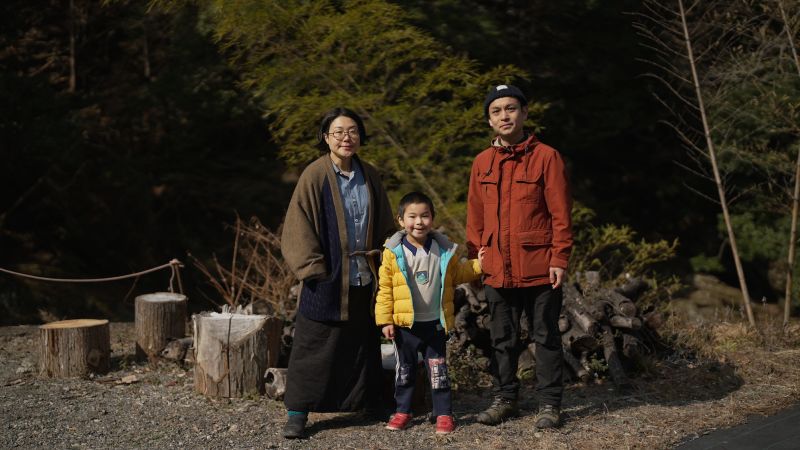
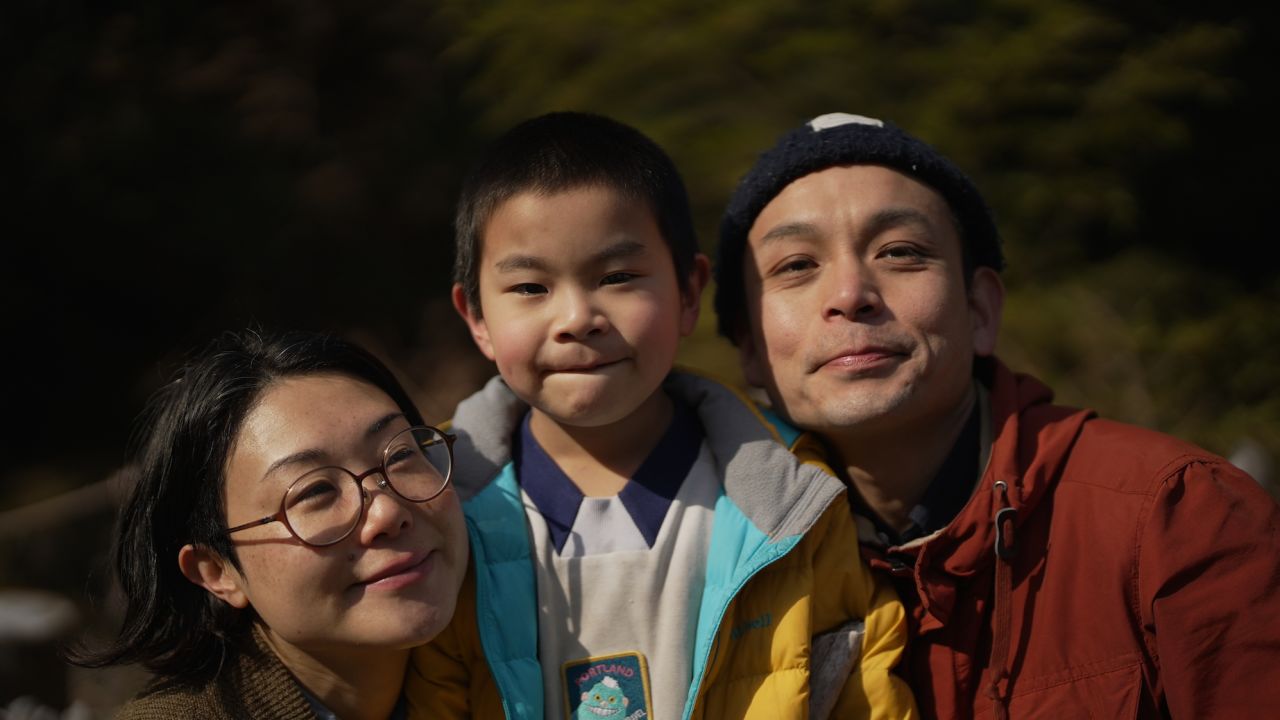
When Kentaro Yokobori was born almost seven years ago, he was the first newborn in the Sogio district of Kawakami village in 25 years. His birth was like a miracle for many villagers.

Well-wishers visited his parents Miho and Hirohito for more than a week – nearly all of them senior citizens, including some who could barely walk.

“The elderly people were very happy to see [Kentaro], and an elderly lady who had difficulty climbing the stairs, with her cane, came to me to hold my baby in her arms. All the elderly people took turns holding my baby,” Miho recalled.

During that quarter century without a newborn, the village population shrank by more than half to just 1,150 – down from 6,000 as recently as 40 years ago – as younger residents left and older residents died. Many homes were abandoned, some overrun by wildlife.

Kawakami is just one of the countless small rural towns and villages that have been forgotten and neglected as younger Japanese head for the cities. More than 90{515baef3fee8ea94d67a98a2b336e0215adf67d225b0e21a4f5c9b13e8fbd502} of Japanese now live in urban areas like Tokyo, Osaka and Kyoto – all linked by Japan’s always-on-time Shinkansen bullet trains.

That has left rural areas and industries like agriculture, forestry, and farming facing a critical labor shortage that will likely get worse in the coming years as the workforce ages. By 2022, the number of people working in agriculture and forestry had declined to 1.9 million from 2.25 million 10 years earlier.

Yet the demise of Kawakami is emblematic of a problem that goes far beyond the Japanese countryside.

The problem for Japan is: people in the cities aren’t having babies either.

The Yokobori family.

“Time is running out to procreate,” Prime Minister Fumio Kishida told a recent press conference, a slogan that seems so far to have fallen short of inspiring the city dwelling majority of the Japanese public.

Amid a flood of disconcerting demographic data, he warned earlier this year the country was “on the brink of not being able to maintain social functions.”

The country saw 799,728 births in 2022, the lowest number on record and barely more than half the 1.5 million births it registered in 1982. Its fertility rate – the average number of children born to women during their reproductive years – has fallen to 1.3 – far below the 2.1 required to maintain a stable population. Deaths have outpaced births for more than a decade.

And in the absence of meaningful immigration – foreigners accounted for just 2.2{515baef3fee8ea94d67a98a2b336e0215adf67d225b0e21a4f5c9b13e8fbd502} of the population in 2021, according to the Japanese government, compared to 13.6{515baef3fee8ea94d67a98a2b336e0215adf67d225b0e21a4f5c9b13e8fbd502} in the United States – some fear the country is hurtling toward the point of no return, when the number of women of child-bearing age hits a critical low from which there is no way to reverse the trend of population decline.

All this has left the leaders of the world’s third-largest economy facing the unenviable task of trying to fund pensions and health care for a ballooning elderly population even as the workforce shrinks.

Up against them are the busy urban lifestyles and long working hours that leave little time for Japanese to start families and the rising costs of living that mean having a baby is simply too expensive for many young people. Then there are the cultural taboos that surround talking about fertility and patriarchal norms that work against mothers returning to work.

Doctor Yuka Okada, the director of Grace Sugiyama Clinic in Tokyo, said cultural barriers meant talking about a woman’s fertility was often off limits.

“(People see the topic as) a little bit embarrassing. Think about your body and think about (what happens) after fertility. It is very important. So, it’s not embarrassing.”

Okada is one of the rare working mothers in Japan who has a highly successful career after childbirth. Many of Japan’s highly educated women are relegated to part-time or retail roles – if they reenter the workforce at all. In 2021, 39{515baef3fee8ea94d67a98a2b336e0215adf67d225b0e21a4f5c9b13e8fbd502} of women workers were in part-time employment, compared to 15{515baef3fee8ea94d67a98a2b336e0215adf67d225b0e21a4f5c9b13e8fbd502} of men, according to the OECD.

Tokyo is hoping to address some of these problems, so that working women today will become working mothers tomorrow. The metropolitan government is starting to subsidize egg freezing, so that women have a better chance of a successful pregnancy if they decide to have a baby later in life.

New parents in Japan already get a “baby bonus” of thousands of dollars to cover medical costs. For singles? A state sponsored dating service powered by Artificial Intelligence.

Kaoru Harumashi works on cedar wood to make a barrel.

Whether such measures can turn the tide, in urban or rural areas, remains to be seen. But back in the countryside, Kawakami village offers a precautionary tale of what can happen if demographic declines are not reversed.

Along with its falling population, many of its traditional crafts and ways of life are at risk of dying out.

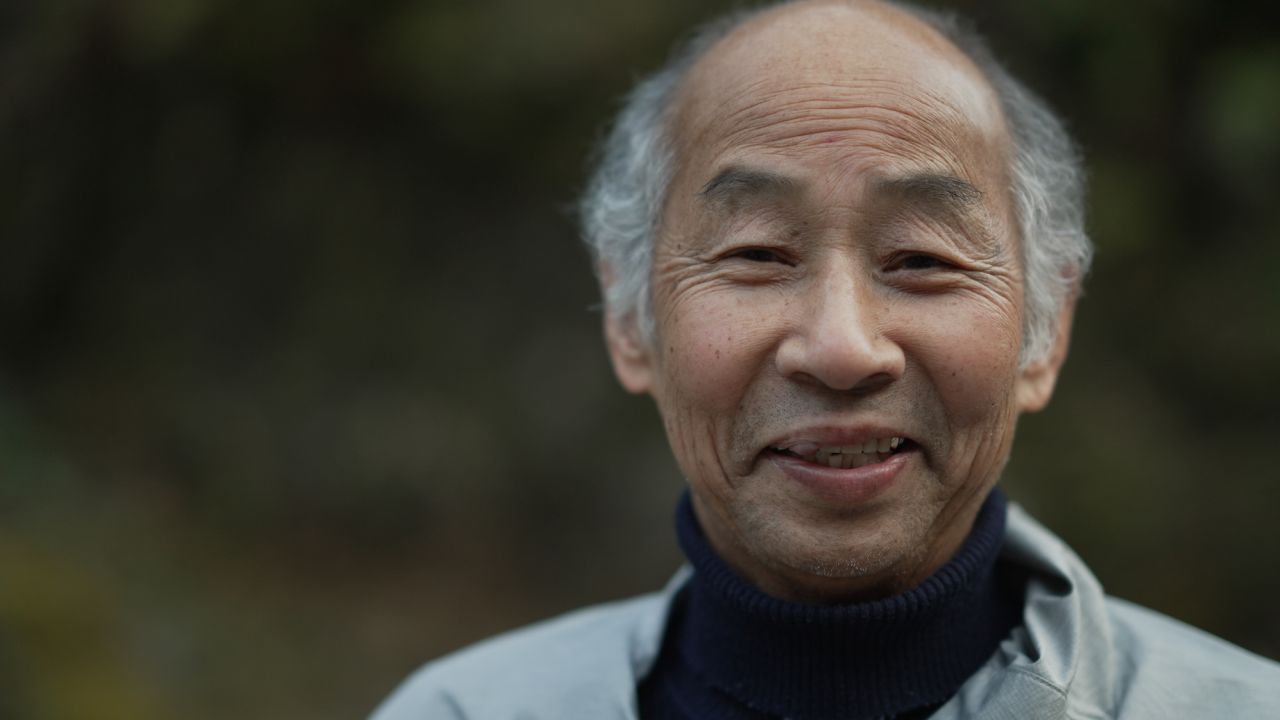
Among the villagers who took turns holding the young Kentaro was Kaoru Harumashi, a lifelong resident of Kawakami village in his 70s. The master woodworker has formed a close bond with the boy, teaching him how to carve the local cedar from surrounding forests.

“He calls me grandpa, but if a real grandpa lived here, he wouldn’t call me grandpa,” he said. “My grandson lives in Kyoto and I don’t get to see him often. I probably feel a stronger affection for Kentaro, whom I see more often, even though we are not related by blood.”

Both of Harumashi’s sons moved away from the village years ago, like many other young rural residents do in Japan.

“If the children don’t choose to continue living in the village, they will go to the city,” he said.

When the Yokoboris moved to Kawakami village about a decade ago, they had no idea most residents were well past retirement age. Over the years, they’ve watched older friends pass away and longtime community traditions fall by the wayside.

“There are not enough people to maintain villages, communities, festivals, and other ward organizations, and it is becoming impossible to do so,” Miho said.

“The more I get to know people, I mean elderly people, the more I feel sadness that I have to say goodbye to them. Life is actually going on with or without the village,” she said. “At the same time, it is very sad to see the surrounding, local people dwindling away.”

Kaoru Harumashi is a lifelong villager. Kentaro calls him grandpa.

If that sounds depressing, perhaps it’s because in recent years, Japan’s battle to boost the birthrate has given few reasons for optimism.

Still, a small ray of hope may just be discernible in the story of the Yokoboris. Kentaro’s birth was unusual not only because the village had waited so long, but because his parents had moved to the countryside from the city – bucking the decades old trend in which the young increasingly plump for the 24/7 convenience of Japanese city life.

Some recent surveys suggest more young people like them are considering the appeals of country life, lured by the low cost of living, clean air, and low stress lifestyles that many see as vital to having families. One study of residents in the Tokyo area found 34{515baef3fee8ea94d67a98a2b336e0215adf67d225b0e21a4f5c9b13e8fbd502} of respondents expressed an interest in moving to a rural area, up from 25.1{515baef3fee8ea94d67a98a2b336e0215adf67d225b0e21a4f5c9b13e8fbd502} in 2019. Among those in their 20s, as many as 44.9{515baef3fee8ea94d67a98a2b336e0215adf67d225b0e21a4f5c9b13e8fbd502} expressed an interest.

The Yokoboris say starting a family would have been far more difficult – financially and personally – if they still lived in the city.

Their decision to move was triggered by a Japanese national tragedy twelve years ago. On March 11, 2011, an earthquake shook the ground violently for several minutes across much of the country, triggering tsunami waves taller than a 10-story building that devastated huge swaths of the east coast and caused a meltdown at the Fukushima Daiichi Nuclear Power Plant.

Miho was an office worker in Tokyo at the time. She remembers feeling helpless as daily life in Japan’s largest city fell apart.

“Everyone was panicking, so it was like a war, although I have never experienced a war. It was like having money but not being able to buy water. All the transportation was closed, so you couldn’t use it. I felt very weak,” she recalled.

The tragedy was a moment of awakening for Miho and Hirohito, who was working as a graphic designer at the time.

“The things I had been relying on suddenly felt unreliable, and I felt that I was actually living in a very unstable place. I felt that I had to secure such a place by myself,” he said.

The couple found that place in one of Japan’s most remote areas, Nara prefecture. It is a land of majestic mountains and tiny townships, tucked away along winding roads beneath towering cedar trees taller than most of the buildings.

They quit their jobs in the city and moved to a simple mountain house, where they run a small bed and breakfast. He learned the art of woodworking and specializes in producing cedar barrels for Japanese sake breweries. She is a full-time homemaker. They raise chickens, grow vegetables, chop wood, and care for Kentaro, who’s about to enter the first grade.

The big question, for both Kawakami village and the rest of Japan: Is Kentaro’s birth a sign of better times to come – or a miracle birth in a dying way of life.


WHO highlights oral health neglect affecting nearly half of the world’s population

WHO highlights oral health neglect affecting nearly half of the world’s population

A new World-wide Oral Wellbeing Status Report posted now by the Planet Wellbeing Group (WHO) presents the very first-at any time complete picture of oral disease stress with data profiles for 194 international locations, providing unique insights into vital parts and markers of oral wellness that are relevant for determination-makers.

The report displays that just about 50 {515baef3fee8ea94d67a98a2b336e0215adf67d225b0e21a4f5c9b13e8fbd502} of the world’s inhabitants (45{515baef3fee8ea94d67a98a2b336e0215adf67d225b0e21a4f5c9b13e8fbd502} or 3.5 billion men and women) put up with from oral health conditions, with 3 out of every 4 afflicted people dwelling in minimal- and center-income international locations. World-wide situations of oral illnesses have increased by 1 billion above the past 30 years—a clear indication that several folks do not have obtain to prevention and treatment of oral ailments.

“Oral well being has very long been neglected in world health, but numerous oral illnesses can be prevented and handled with the price-successful steps outlined in this report,” claimed WHO Director-Basic, Dr Tedros Adhanom Ghebreyesus. “WHO is fully commited to furnishing assistance and assist to countries so that all folks, wherever they stay and regardless of what their cash flow, have the understanding and instruments essential to glance immediately after their tooth and mouths, and to obtain providers for avoidance and care when they want them.”

Quick improve of oral conditions

The most popular oral disorders are dental caries (tooth decay), severe gum illness, tooth loss and oral cancers.  Untreated dental caries is the single most typical condition globally, influencing an approximated 2.5 billion people today. Serious gum ailment  ̶  a main trigger of whole tooth loss  ̶  is approximated to have an impact on 1 billion folks around the globe.  About 380 000 new instances of oral cancers are identified each individual year.

The report underscores the glaring inequalities in accessibility to oral wellbeing products and services, with a huge stress of oral illnesses and ailments impacting the most vulnerable and deprived populations. Persons on reduced incomes, people today living with disabilities, more mature persons dwelling by itself or in care properties, those dwelling in distant and rural communities and individuals from minority teams carry a larger load of oral conditions.

This pattern of inequalities is comparable to other noncommunicable diseases these kinds of as cancers, cardiovascular diseases, diabetic issues, and mental problems. Risk elements prevalent to noncommunicable conditions these kinds of as significant sugar consumption, all types of tobacco use, and dangerous use of alcohol all lead to the world wide oral wellbeing crisis.

Boundaries to delivering oral wellness expert services

Only a modest proportion of the worldwide populace is included by important oral well being companies, and these with the finest require frequently have the the very least obtain to solutions. The key barriers to offering access to oral health and fitness services for all include:

  1. Oral overall health care necessitates high out-of-pocket expenses. This generally potential customers to catastrophic fees and sizeable money stress for households and communities.
  2. The provision of oral well being solutions mainly depends on extremely specialized suppliers applying expensive significant-tech devices and components, and these companies are not effectively built-in with main overall health care designs.
  3. Poor information and surveillance techniques, put together with minimal precedence for public oral wellbeing investigate are key bottlenecks to establishing much more efficient oral health interventions and guidelines.

Opportunities to enhance world wide oral wellbeing

The report showcases many promising prospects to improve the condition of international oral well being such as:

  • adopting a general public overall health tactic by addressing prevalent possibility aspects by advertising and marketing a nicely-well balanced diet program reduced in sugars, halting use of all kinds of tobacco, cutting down alcoholic beverages use and enhancing obtain to efficient and cost-effective fluoride toothpaste.
  • setting up oral health and fitness providers as component of national wellbeing and strengthening integration of oral wellness providers in primary wellness care as portion of universal overall health coverage.
  • redefining oral wellbeing workforce designs to react to population demands and growing competencies of non-dental healthcare staff to grow oral well being assistance protection and
  • strengthening details systems by gathering and integrating oral overall health information into national wellbeing checking techniques.

“Placing people at the coronary heart of oral health and fitness products and services is critical if we are to attain the eyesight of universal wellness coverage for all men and women and communities by 2030,” said Dr Bente Mikkelsen, WHO Director for Noncommunicable Health conditions.

She included: “This report functions as a starting point by delivering baseline information to support nations keep an eye on progress of implementation, although also giving well timed and appropriate feedback to conclusion-makers at the countrywide amount. Collectively, we can change the current problem of oral wellness neglect.”


Note to editors

To check out the start occasion on Friday, 18 November from 14.00 – 15:30 CET, remember to register at  https://who.zoom.us/webinar/register/WN_hDqiDjW9TBm4fSVljj3zQw.

The Global Oral Health and fitness Position Report makes use of the newest obtainable info from the World-wide Burden of Disease (GBD) job, the Worldwide Agency for Investigate on Cancer (IARC) and worldwide WHO surveys. The report is directed at policymakers, practitioners, researchers, advancement organizations and associates of the private sector and civil culture. 

In 2022, the Globe Health and fitness Assembly adopted a worldwide strategy on oral well being with a vision of universal health protection for oral overall health for all individuals and communities by 2030. A in-depth action prepare is underneath development to assist nations around the world translate the worldwide method into exercise. This incorporates a monitoring framework for monitoring progress, with measurable targets to be realized by 2030.